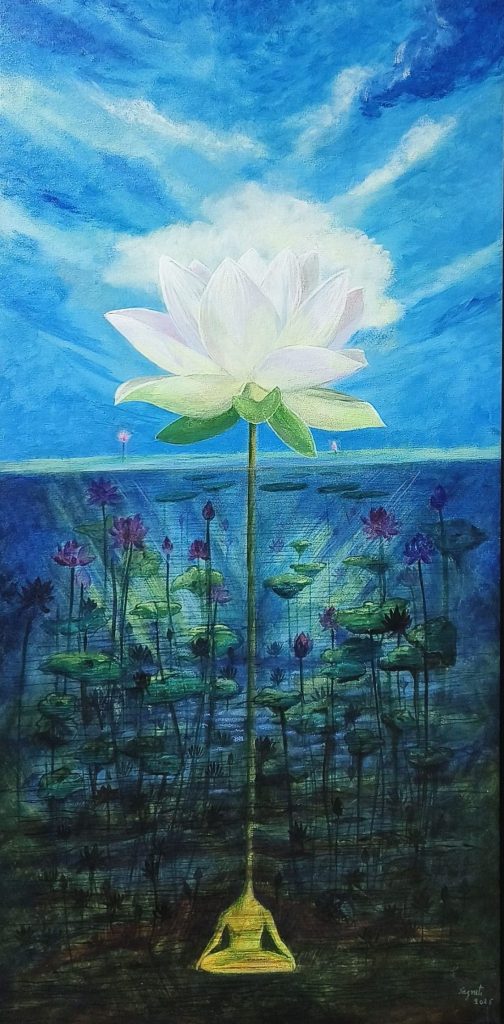
In this luminous and meticulously composed painting, Jagruti Sonawane offers a visual meditation on elevation, resilience, and the transformative quiet of the contemplative mind. A radiant white lotus rises with arresting clarity from a deep, layered aquatic world, its stem stretching through shifting tonal depths to connect the unseen silence of meditation below with the expansive brilliance of the sky above. At the very base, tucked within the darker recesses of the pond, a meditating figure appears almost sculptural—a distilled essence of presence—suggesting that enlightenment does not float apart from struggle, but is rooted in the murky complexities of lived experience.
What makes this work profoundly compelling is the way Sonawane choreographs transitions: light gradually intensifies as the eye ascends, colour warms, and the composition opens outward, mirroring the gentle ascent of awareness from introspection toward clarity. The surrounding lotus field, populated by blossoms in various stages of bloom, becomes a subtle metaphor for the collective human condition—each life suspended at its own point within a continuum of becoming. The sky above, painted with generous light and sweeping motion, feels almost metaphysical, as though perception itself has widened.
Deeply informed by Buddhist philosophy, Sonawane’s practice centres on mindfulness, impermanence, and compassion. Here, those ideas take vivid form. The painting does not dramatise enlightenment; it approaches it as a state of quiet inevitability, emerging organically when stillness and discipline converge. The white lotus stands not merely as a symbol but as a living presence—fragile yet unwavering, serene yet powerfully assertive. Sonawane invites viewers into a contemplative encounter, to travel visually and emotionally from darkness to illumination, and to recognise within this elegant ascent a mirror of their own inward journeys.