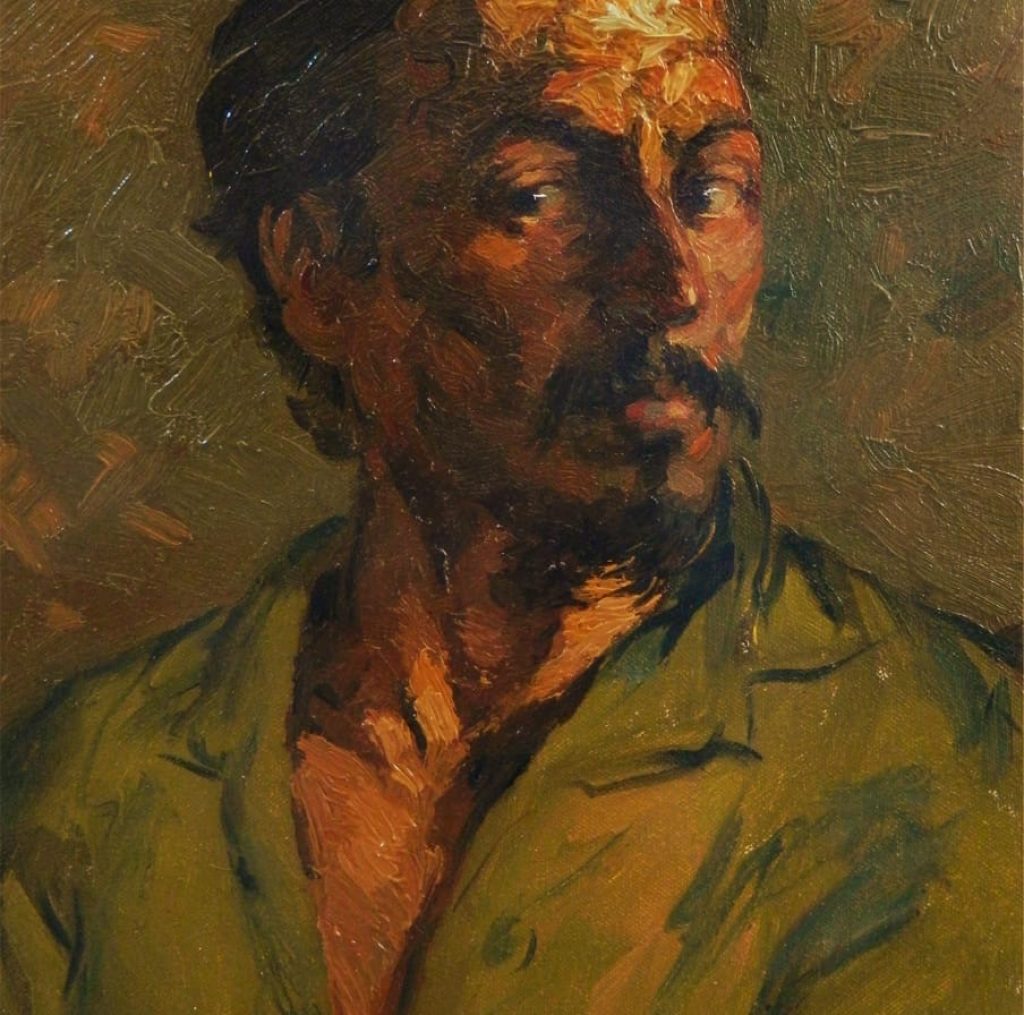
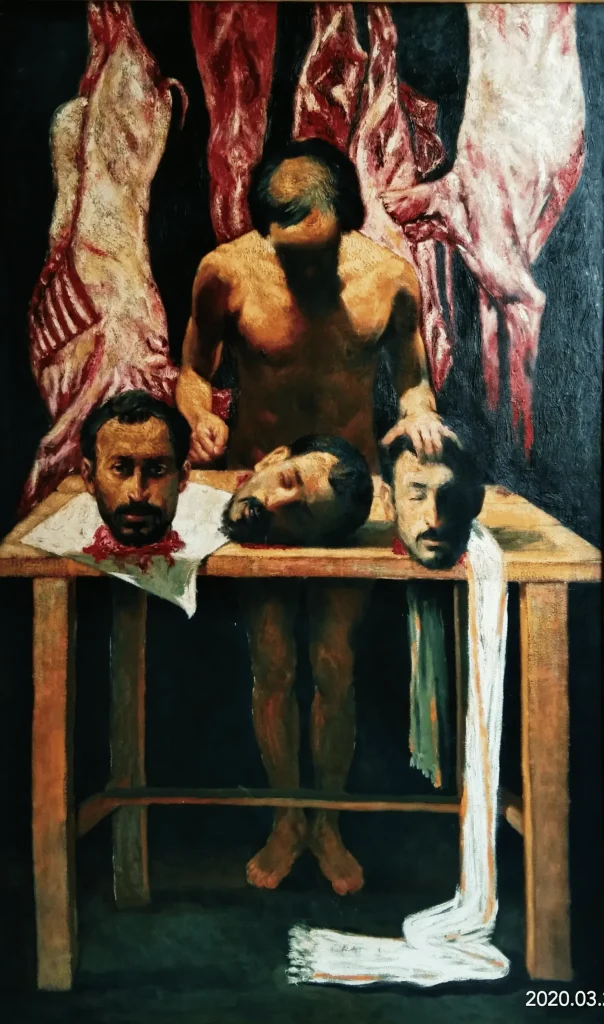
In this powerful and unsettling composition, Gopal Gangawane confronts the viewer with a deeply charged meditation on identity, mortality, and the fragmentation of the self. At the center of the work stands a vulnerable, unclothed figure, bowed forward over a wooden table upon which three severed heads—each bearing his likeness—are placed with stark, almost ceremonial clarity. Surrounding him, flayed animal carcasses hang like silent witnesses, transforming the space into a haunting theatre of existential confrontation. Rather than indulging in shock, Gangawane shapes this imagery into a profound psychological allegory.
What emerges is a striking interrogation of selfhood. The repeated heads suggest multiplicity of identity—the shifting selves one inhabits through experience, time, and internal struggle. The bowed posture of the central figure speaks not of brutality, but of burden, introspection, and the weight of existence. The composition becomes a space where the artist examines the fragility of life and the violence—emotional, societal, psychological—that often accompanies the search for truth and authenticity.
Gangawane’s painterly execution reinforces the intensity of the theme. Rich, visceral textures and resonant flesh tones create extraordinary immediacy, while the dramatic chiaroscuro heightens the emotional gravity of the scene. The hanging carcasses echo classical memento mori and historical painterly traditions, yet the painting remains unmistakably contemporary in its emotional charge and conceptual boldness.
This work resists easy interpretation. Instead, it demands contemplation. It is a fearless engagement with vulnerability, mortality, and the existential complexity of being human—offering not spectacle, but a deeply reflective and courageous artistic statement.