Overview
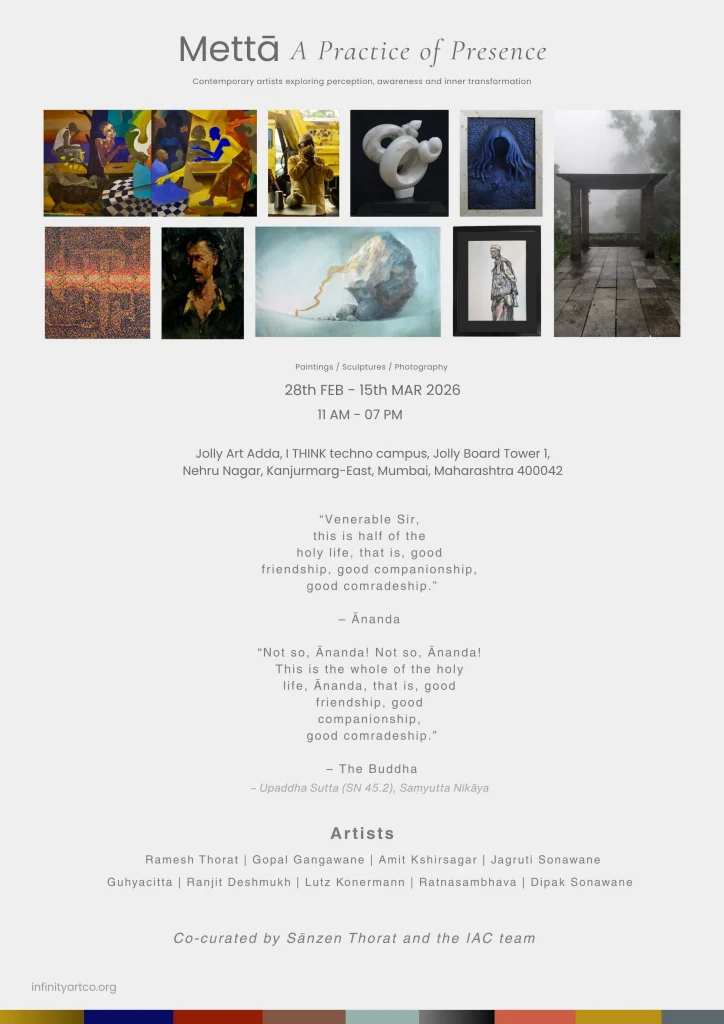
The artists brought together in this exhibition do not share a singular visual language or a unified conceptual framework. Their works emerge from different concerns, materials, and ways of thinking. At first glance, there is no obvious cohesion. What connects them is not style, but a quality of relationship.
We approached this connection through the idea of Mettā — a Pāli term often translated as loving-kindness. It is an active disposition of goodwill, care, and non-conflict toward others.
In this sense, Mettā does not attempt to unify the works. It connects the artists together without forcing sameness.
The exhibition unfolded as a space where distinct practices could remain intact, while still being in dialogue through presence.
Programs and Events
The exhibition extended beyond the works on display through a series of gatherings that unfolded across the fifteen days. Each event shifted the way the space was experienced. From looking, to listening, to conversation.
Artist Dialogue & Ghazal Evening
The exhibition opened with an artist dialogue, bringing together participating artists in an open conversation. Rather than a formal presentation, it remained an exchange shaped by presence — moving between process, personal journeys, and the questions that inform their practices.
This was followed by a ghazal performance by Surajprakash Singh in the evening. As the light shifted, the space transitioned from dialogue into listening, allowing the exhibition to be experienced through a different register.
Ghazal Evening
A second evening of ghazals featured Bageshree Panchale and Ramakant Gaikwad, along with their student Diya Purohit.
Rooted in the tradition of Hindustani music, the ghazal form carries poetry through melody, placing emphasis on meaning, emotion, and subtle expressio, a quality that has shaped the genre over decades.
The performance unfolded as an intimate mehfil, where voice, text, and silence held equal weight. The presence of a student alongside senior practitioners added another layer, that of continuity and transmission within practice.
Flute Recital
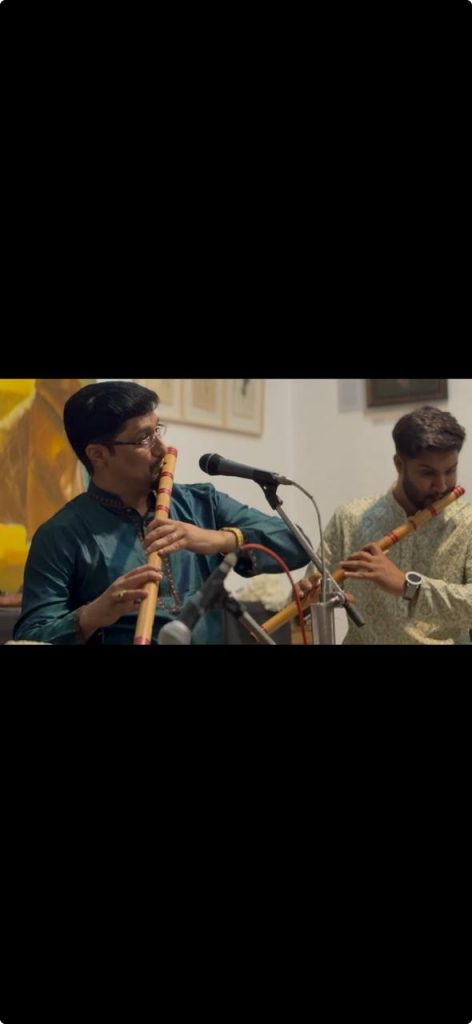
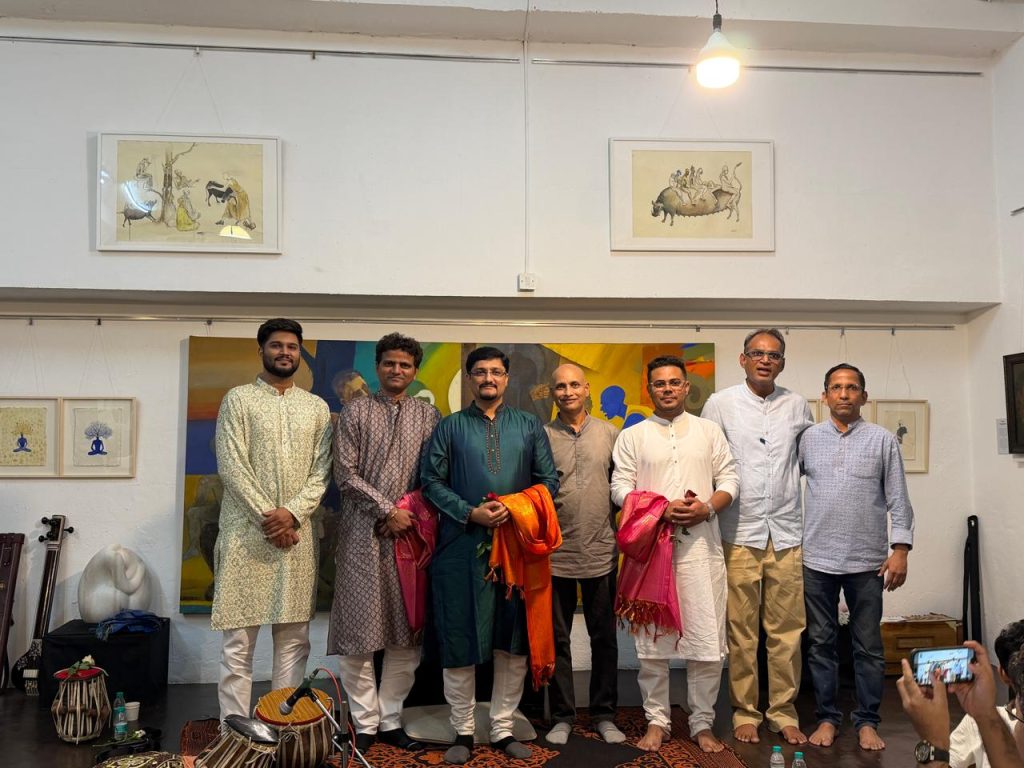
The exhibition concluded its series of programs with a flute recital by Vivek Sonar.
A disciple of Hariprasad Chaurasia, Sonar’s work is rooted in the Hindustani classical tradition while also extending into composition and collaborative formats.
His performance introduced a continuous, immersive sound into the space. Without a fixed stage, the music moved through the exhibition, altering the pace of engagement and allowing viewers to experience the works in a more attentive and unhurried way.
Open Interactions
Outside of scheduled programs, the space remained open for informal exchanges. Artists and visitors engaged in conversations that were not structured or moderated, often moving beyond the works into questions of perception, practice, and lived experience.
Exhibition Documentation


Our approach
Infinity Art Collaborators is a multidisciplinary platform that brings together artists across painting, sculpture, music, and other forms of practice.
The focus is not on grouping similar works, but on creating a space where different approaches can exist alongside each other without being reduced to a single narrative. Artists working with varied mediums, views, and processes are equally welcome.
What connects this together is a set of shared awareness, attention, inner inquiry, and process-led practice.
Our way of supporting artists is rooted in engagement and presentation. Through artist dialogues, open conversations, and shared gatherings, we create conditions where artists can speak about their work in their own terms, question their process, and encounter other perspectives. These exchanges are an essential part of the practice.
We build a space where different art forms can coexist without hierarchy, dialogue becomes a tool for deepening practice and the relationship between artist, work, and viewer remains active.